
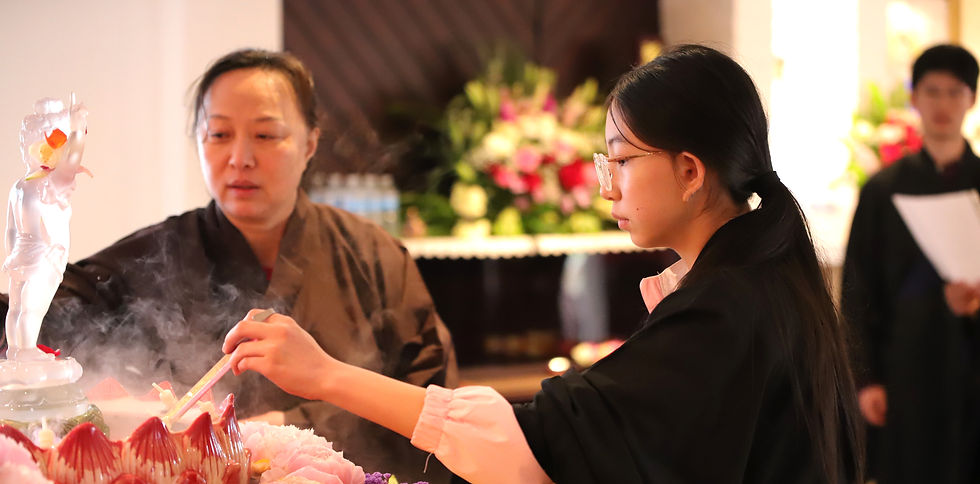
OUR MONASTERY
The monastery is located in Eastbourne, southern England, and is the first Chinese Buddhist monastery in the Sussex region of the UK, founded by a Buddhist nun.
Origin
After four years of dedicated effort, the Mahayana Buddhist Foundation has acquired a formal church, with the intention of transforming it into a Buddhist monastery.


1st Stage 2026/05/30
The construction of the Mahavira Hall is scheduled to begin before the end of May.

2nd Stage 2026/12/31
The Mahavira Hall is expected to be completed by the end of the year.

3rd Stage 2027/12/31
The Amitabha Hall is planned for completion by the end of 2027.

4th Stage 2027/12/31
The Dining Hall is planned for completion by the end of 2027.
Mahavira Hall
Mahavira Hall (Da Xiong Bao Dian) is the central hall of a Chinese Buddhist temple.
The name “Mahavira (Da Xiong)” signifies the Buddha’s great wisdom and great power, capable of subduing the Four Māras (the Māras of afflictions, aggregates, death, and the Māra of the Āsvattha heaven). The term “Bao” refers to the Three Jewels, Buddha, Dharma, and Sangha. The hall usually enshrines Śākyamuni Buddha as the principal figure, often accompanied by the Three Buddhas of the Past, Present, and Future, or by the two chief disciples Kāśyapa and Ānanda standing alongside.
The hall and its entrance will enshrine:
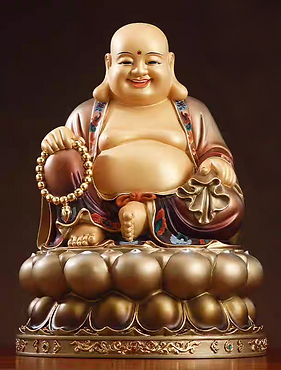
Maitreya Bodhisattva
A statue of Maitreya Bodhisattva is placed at the entrance of the Mahayira Hall, symbolizing a connection with the Future Buddha and receiving his guidance. (Image for reference only, final statue may vary)

Thousand Buddha Wall
The Hall of Ten Thousand Buddhas enshrines the Four Great Bodhisattvas most closely connected with sentient beings in the Saha World: Kṣitigarbha, Avalokiteśvara, and Samantabhadra. This allows practitioners living far from home to pay respect to the Bodhisattvas and receive their blessings and protection, as if visiting the Four Sacred Mountains in China. (Image for reference only, final statue may vary.)
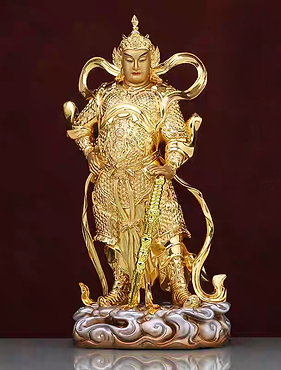
Skanda Bodhisattva
A statue of the Dharma Protector Skanda (Weituo) Bodhisattva will be enshrined at the entrance of the Main Hall, symbolizing the protection of the Dharma and the precepts, safeguarding the hall’s purity and dignity, and ensuring the enduring presence of the Buddha’s teachings. (Image for reference only, final statue may vary)
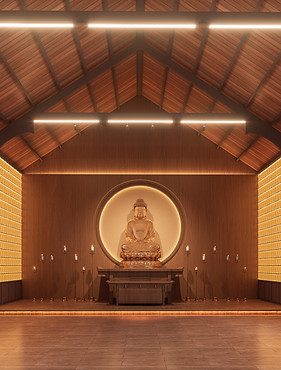
The Mahayira Hall enshrines a statue of Shakyamuni Buddha, symbolizing remembrance of the Buddha’s compassion and the practice of his teachings. (Image is a preliminary design, final statue may vary)
Shakyamuni Buddha
Amitābha Hall
The Amitabha Hall enshrines Amitabha Buddha, Avalokiteśvara Bodhisattva, and Mahasthamaprapta Bodhisattva.
It is primarily used for performing rites and offering prayers for the deceased. Devotees come here to pay respects, recite “Namo Amituofo,” and perform sutra recitations and dedications, praying that the departed may be guided by the Buddha to the Western Pure Land, bringing benefit to both the living and the deceased.
The hall and its entrance will enshrine:
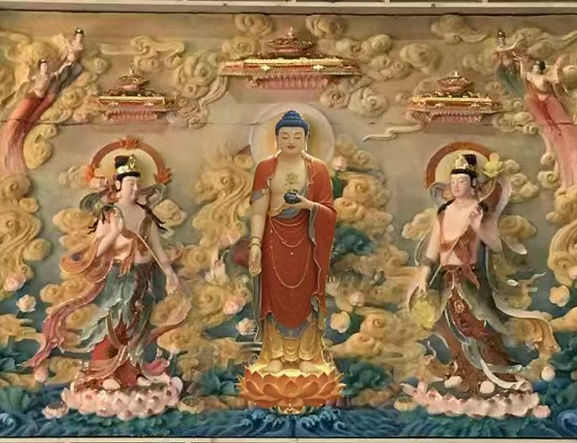
Wood Carving of the Western Three Saints
The Western Three Saints consist of Amitabha Buddha and his two attendants, Avalokiteśvara Bodhisattva and Mahasthamaprapta Bodhisattva. Amitabha Buddha, guided by compassion and wisdom, made the Forty-Eight Great Vows to establish the Pure Land, compassionately embracing all beings and guiding them toward rebirth in the Western Paradise. (Image for reference only, final statue may vary)